FOLLOW ME HERE
nell haynes
  • home
  • publications
  • projects
  • fieldnotes
  • teaching
  • contact
  • español

they paved (nationalist) paradise to put up a parking lot: cultural dimensions of the bolivian-chilean maritime conflict

19/5/2015

0 Comments

 
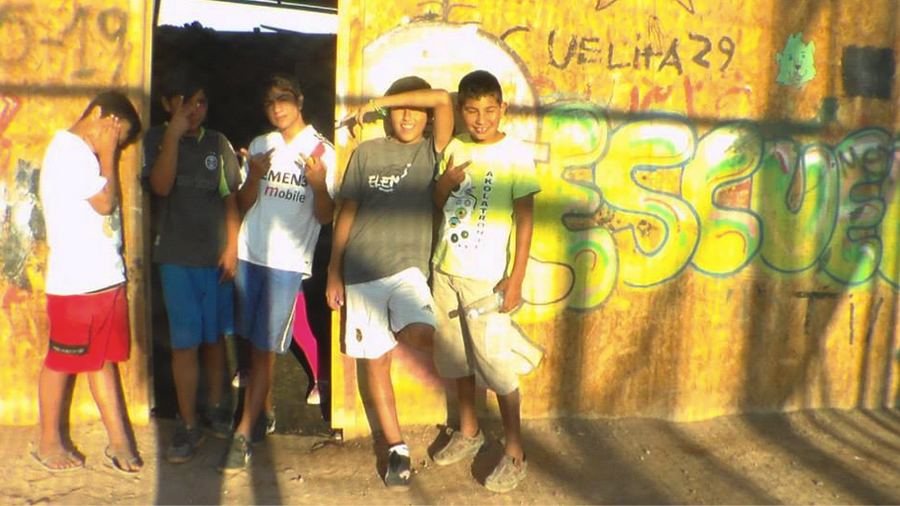
“I joined a protest group!” Andres proclaimed proudly, knowing that I tend to be a loud proponent of the right of individuals to shake things up with collective action.

“What are you protesting?” I asked, and he pulled out his cracked Samsung Galaxy to show me. He opened Whatsapp and handed me the phone, where I read a brief manifesto in opposition to the construction of a parking lot for Bolivian trucks in Arica. “They’re going to spend 3.2 million dollars on a parking lot! And not for Chileans. For Bolivians. Do you think Bolivia has parking lots for Chilean vehicles? Or are there parking lots for us in Argentina and Colombia? No! With that money they could build homes, they could feed how many families for a year, they could fix the roads.”

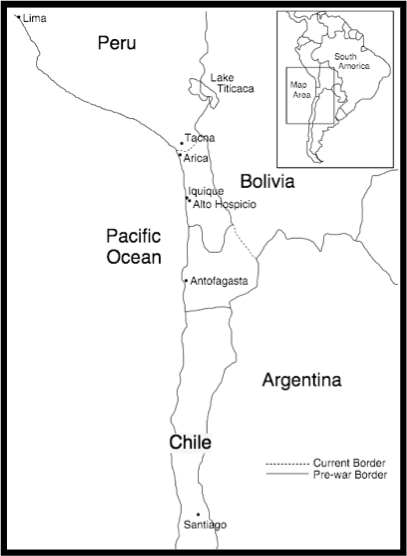
Though a parking lot for Bolivian trucks may seem like a silly issue (and a strange one to those unfamiliar with Bolivian/Chilean politics), it cuts to the heart of much deeper issues of nationalism. The two countries are currently waiting for International Court of Justice at The Hague to decide if they will consider Bolivia’s claim to renegotiate coastal access, which was lost in the War of the Pacific in the late 1800s (see my Primer on the Bolivian-Chilean Maritime Conflict). Bolivia claims that, through they ceded the coastline in a 1904 treaty, Chile is obligated to negotiate coastal access based on Chile’s offers to sea access long after the treaty was enforced (see article in The Economist). 
Picture

While on the surface this is a dispute about trade and more than a century’s worth of lost GDP (not to mention the copper fields Bolivia lost in the war, which currently make up more than 30% of Chile’s export market). There are deeply nationalistic emotions that arise in these debates as well. Even for lower middle class Bolivians and Chileans—the type of people who would see little to no change in economic terms—are deeply invested in these issues. Many Bolivians see Chileans as arrogant local imperialists, publishing books such as Chile Depredador [Chile, the Predator]. Many Chileans, particularly in the northern region near the border with Bolivia, see Bolivians as backwards and uneducated, looking to get ahead by taking advantage of Chile’s resources, either by immigrating to work or trying to take a coastline that is rightfully Chilean. While for a few, solidarity across borders relies on class (see my blog on The Border: A view from Facebook), the grand majority of these national citizens have internalized their nationalism to the extent that their own lack of benefits from the arrangement and the similarities between lower middle class citizens on both sides of the border are simply overlooked.

Picture

This is particularly perplexing, given that northerners’ relationship with nationalism is rarely straightforward. Regional affiliation is usually much more important than national, as many feel disenfranchised from national politics and overlooked by the national government who simply extracts resources and money from the northern region’s copper mines, while leaving the people without social services. Yet there is strong identification with Chileanness when related to cultural forms such as food, sport, and heritage. This may be largly thanks to the process of “Chileanization” enacted in the territory when it was transferred to Chilean control in 1883. To mitigate resentment towards the military and new nation as a whole, the Chilean government launched a projects aimed at incorporating the northern population into the nation-state through religion and education for both children and adults, with mestizaje and modernization at the core of the country’s nationalist discourse. 

Even today, discourses of modernity undergird the tensions between Chilean and Bolivian citizens. The conflation of nation, modernity, and race means that for northern Chileans, they represent modern mestizo subjects, while Bolivians are poor, traditional, and indigenous (which is particularly amplified by Bolivia’s recent symbolic valorization of indigeneity under Evo Morales and the MAS government).

The border dispute, for these citizens that stand little chance of material benefit or loss from a renegotiation, is important because it cuts to the root of self-understanding. To cede a border to Bolivia would mean defeat by a country and people who not only are behind in terms of modernization, but use that as an excuse to extract resources that rightfully belong to Chileans (there are certainly parallels here with discourses about Mexican and Central American immigrants to the United States). For Bolivians, Chile’s unwillingness to open negotiations is simply evidence that the nation and its residents remain unrepentant (and at times racist) thieves.

So then, why is a parking lot so important? Not only, as Andres pointed out could that money, taken from Chilean taxes (and thus rightfully belonging to Chileans), be used for something to benefit Chileans, but ceding something to Bolivians admits that perhaps there is a need for negotiation. And those negotiations are not only about access to maritime trade, but are about what it means to be a modern mestizo citizen.

This belonging was closely associated with conceptions of social and economic class, which were almost always highlighted, claiming solidarity with working class and non-cosmopolitan lifestyle. At times this even led to cross-border identifications in which perceptions of common class and proletariat ideals superseded national identification. Similarly, differences in race and particularly indigeneity were often erased in service of highlighting a broader sense of marginality, in which most Hospiceños could claim a part, rather than compartmentalizing or hierarchizing forms of disadvantage.


Further Reading

A Primer on the Bolivian-Chilean Maritime Conflict
The Peruvian-Chilean Maritime Border: A View from Facebook

The Economist - Bolivia's Access to the Sea
The Economist - The Economics of Landlocked Countries

Lessie Jo Frazier, Salt in the Sand: Memory, Violence, and the Nation-State in Chile, 1890 to the Present (Durham: Duke University Press, 2007).

Cástulo Martínez, Chile Depredador (La Paz: Librería Editorial G.U.M., 2010, 3er ed).

0 Comments

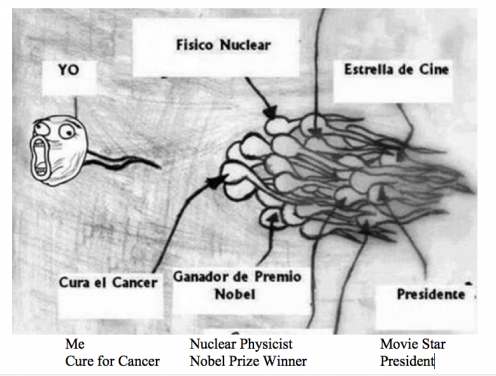
meme humor: self-deprication

23/3/2015

0 Comments

 
this fieldnote has also been posted on the WHY WE POST blog at University College London

Picture
I  recently wrote about the ways that northern Chileans express normativity on social media, using Kermit the Frog and contrasts between “Expected” and “Reality” memes as examples. But perhaps what demonstrates a desire for normativity even further is the way many individuals in Alto Hospicio express self-deprecation.

read the rest of this entry on the WHY WE POST blog
0 Comments

comparative ethnography: local and global levels

12/2/2015

0 Comments

 
This fieldnote has also been posted on the WHY WE POST blog at University College London
Picture
For the first year of my fieldwork, I lived in Alto Hospicio, Chile, a city considered marginal and home to the working poor (as the US class system would call them). I spent the year chatting with neighbors in my large apartment building, kicking balls back to children playing in the street, shopping at the local markets and grocery stores, buying completo hot dogs from food vendors, walking along the dusty streets, and taking the public bus to and from Iquique. Now, for my last few months of fieldwork, I am living in Iquique, the larger port city, just 10 km down the 600 m high hill that creates a barrier between the two cities.

​read the rest of this entry on the WHY WE POST blog
0 Comments

writing (in) the field

21/1/2015

0 Comments

 
A lot of what has been in these fieldnotes lately has come from drafts of chapters that will eventually (in January 2016) become my book about social media in Alto Hospicio. I've been out of the field for 5 months and writing profusely. But tomorrow, I return. I'll still be writing chapters, and then editing the complete draft while in the field, but in a lot of ways, returning to the field represents a complete shift of mindset. Suddenly writing doesn't feel like my job. I don't "go to work." Rather, I go to the kitchen table and open my laptop. Or who knows if I will even have a table. It may be sit on the bed or on the floor and open my laptop. Fortunately, I decided some time ago, that finishing any major work shall be rewarded with a massage at Hotel Europa in La Paz. 

It's not standard practice, but both this project and the research that led to my PhD have happened in this way. I've been in and out of the field, and end up writing significant portions of the ethnography while in the field. For me this has been helpful. When you need to check a fact, you text or visit a friend. When you need a little more information, it only takes a few hours to set up a short interview. While it might be harder to get into the headspace of writing while in the field, it has its advantages. 

So, I'm not sure what will end up in these fieldnotes for the next few months (until I move to Santiago in June for the rest of my postdoc residency), but it will certainly reflect, in its own way, the actual space in which I'm writing. And I suppose that's one thing I appreciate about anthropology. That's not something to be overcome but something to learn from.
0 Comments

normativity on social media

17/1/2015

0 Comments

 
As many entries in the blog affirm, local cultural aspects are often reflected or made even more visual on social media. As I have written before of my fieldsite, there is a certain normativity that pervades social life. Material goods such as homes, clothing, electronics, and even food all fall within an “acceptable” range of normality. No one is trying to keep up with Joneses, because there’s no need. Instead the Joneses and the Smiths and the Rodriguezes and the Correas all outwardly exhibit pretty much the same level of consumerism. Work and salary similarly fall within a circumscribed set of opportunities, and because there is little market for advanced degrees, technical education or a 2 year post-secondary degree is usually the highest one will achieve academically. This acceptance of normativity is apparent on social media as well.

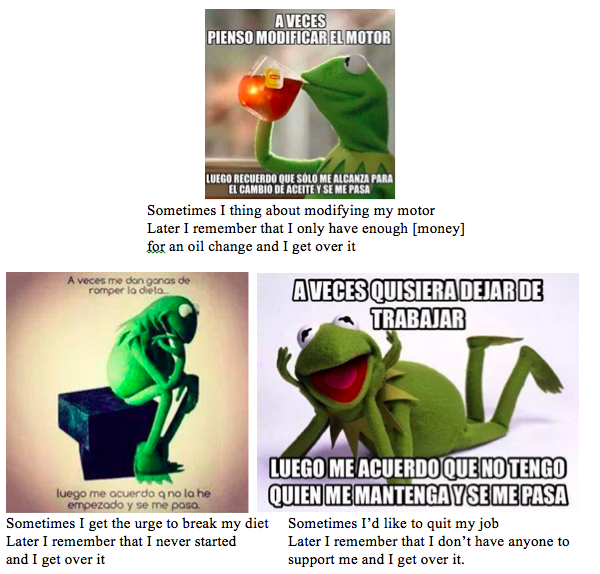
One particularly amusing example of this type of acceptance is especially apparent from a certain style of meme that overwhelmed Facebook in October of 2014. These “Rana René” (Kermit the Frog, in English) memes expressed a sense of abandoned aspirations. In these memes, the frog expresses desire for something—a better physique, nicer material goods, a better family- or love-life—but concludes that it is unlikely to happen, and that “se me pasa,” “I get over it.”

Picture
Similarly, during June and July of 2014 a common form of meme contrasted the expected with reality. The example below demonstrates the “expected” man at the beach—one who looks like a model, with a fit body, tan skin, and picturesque background. The “reality” shows a man who is out of shape, lighter skinned, and on a beach populated by other people and structures. It does not portray the sort of serene, dreamlike setting of the “expected.” In others, the “expected” would portray equally “ideal” settings, people, clothing, parties, architecture, or romantic situations. The reality would always humorously demonstrate something more mundane, or even disastrous. These memes became so ubiquitous that they were even used as inspiration for advertising, as for the dessert brand below.
Picture
For me, these correspondences between social media and social life reinforce the assertion by the Global Social Media Impact Study that this type of research must combine online work with grounded ethnography in the fieldsite. These posts could have caught my eye had I never set foot in northern Chile, but knowing what I know about what the place and people look like, how they act, and what the desires and aspirations are for individuals, I understand the importance of these posts as expressing the normativity that is so important to the social fabric of the community.
0 Comments

it’s all in the comments: the sociality behind social media

2/12/2014

0 Comments

 
this fieldnote has also been posted on the WHY WE POST blog at University College London
Picture
As I begin to write my book about social media in Northern Chile, it’s great to see little insights emerge. One of the first of these insights is that interaction is essential to the ways people in my fieldsite use social networking sites. Facebook and Twitter are the most widely used, with 95% of people using Facebook (82% daily), and 77% using Whatsapp with frequency. But with other sites or applications, use falls off drastically. The next two most popular forms of social media are Twitter and Instagram which are used by 30% and 22% of those surveyed respectively.

So what makes Facebook so popular but not Twitter? My first reaction was that Twitter doesn’t have the visual component that Facebook does. This was partially based on the fact that many of my informants told me that they find Twitter boring. Yet Instagram is even less well-used than Twitter. And as I began looking more closely at the specific ways people use Facebook and Twitter, I began to see why they feel this way.
​
​read the rest of this entry on the WHY WE POST blog
0 Comments

faking it

26/11/2014

0 Comments

 
I am something of a suspicious character in Alto Hospicio. First, I visibly stand out. As a very light skinned person of Polish, German, and English ancestry, I simply look very different from most of the residents of Alto Hospicio who are some combination of Spanish, Indigenous Aymara, Quechua, or Mapuche, Afrocaribbean, and/or Chinese ancestry. I am catcalled quite often, even while walking to the supermarket midday. These yells usually reference the fact that I am visibly different. “Gringa,” “blanca,” [whitey] and even “extranjera” [foreigner] are the most usual shouts. I hear. Even in less harassing ways, I’ve been pointed out on the street, as happened my first week in Alto Hospicio, walking along the commercial center a woman stopped in front of me simply to tell me “You look North American!” scurrying away before I could respond. 

maybe I look too much like her?


Picture
Beyond the striking impression of my physical appearance, I was untrustworthy as a single woman. Having no family in the area, not to mention a male partner or children was often a red flag for people. Even though many people I met had left family behind in other countries or regions of Chile when migrating to the area, they usually moved with a least one family member or friend. In a lot of ways, my solitariness kept me solitary.

As I got to know people, at times I felt I was being given a test. A colleague at Pontificia Universidad Católica de Chile had connected me with some politically active students in Alto Hospicio, and they invited me to help put up posters for a candidate for local representative before the elections in November 2013. I met Juan in the evening, outside one of the local schools where we made small talk before they others arrived. He asked me about my opinions on the Occupy Movement in the United States, and I spoke frankly, though keeping in mind his connections to Chilean Student movements. We continued talking about US politics and he asked if I had been very involved during my time in graduate school in Washington, DC. He asked about my support for President Barak Obama. And he asked very detailed questions about who I worked for, where funding for the research came from, and to what institutions the results would be reported. Eventually the other poster hangers arrived and we walked a few blocks to the home of his friend, where we were to mix up the paste for the hangings. As he introduced me to the group, he explained that I was “a trusted friend.” So I had passed the test.

Other tests of my trustworthiness took much longer. The first person I got to know outside of my apartment complex was Miguel, the administrator for the Alto Hospicio group I first joined on Facebook. Yet, it took over two months of online conversations before we met in person. Our chats at first were about the project, then about anthropology in general, while I asked him about his job at a mine in the altiplano and about his family. Later we conversed about television shows, movies, sports, and other hobbies. Eventually he told me funny stories about what his friends had done while drunk. I tried to reciprocate and realized my friends were far less rambunctious than his. Eventually, he invited me out with a group of friends to a dance bar in Iquique, and later I became friendly with his sister Lucia and her husband, often being invited to eat lunch in their home. Eventually one afternoon, sipping strawberry-flavored soda and finishing the noodles and tuna on my plate, Lucia asked Miguel how we met. He launched into a long story of seeing my post on the Facebook group site and being suspicious of it. He clicked on my Facebook profile and thought “What is a gringa like this doing in Alto Hospicio?” But his curiosity prevailed and he engaged me in conversation. As he recounted the story to his sister he eventually arrived at the night we had gone to the dance bar. “I was nervous standing outside the apartment, because I didn’t know what to expect. We had talked enough that I was pretty sure she was a real person, but I was still nervous. I thought maybe she wasn’t real. Maybe it was a fake profile. But then I saw her walking toward me and I just remember being really relieved.” 

0 Comments

perhaps we should call it youradio?

13/11/2014

0 Comments

 
In Northern Chile, most families have the radio on in the home at least 12 hours a day. The radio plays on public transportation busses, private cars, taxis, restaurants, and in service businesses like copy shops and food stores. Older residents report that music has been ever-present this way as long as they can remember. When a song they dislike begins to play they may change the radio station, but they quickly find something more to their taste.

Younger people, however, are pickier. They like many genres and bands that are not played on the radio. They usually dislike Cumbia music (local to the Andes) and Reggaeton (a global form of club music that mixes dance and reggae rhythms), which are the primary songs featured on the radio. For that reason, many younger people prefer to play music with their mobile phone and computer. In fact, this is one of the only ways to select music as the only other place to get music is from vendors at the local market which sell illegally copied cds (called "piratas"-pirates). 

These radios are becoming less prevalent in homes in Alto Hospicio 
as computers and smartphones are more often the devices used to play music. 
Picture


Using these devices, they usually simply search for a song on Youtube. They turn up the speakers as high as possible and and enjoy this self selected music. They rarely pay attention to the video, because to them it is simply a byproduct of the important part--music. Though a few  young people report having Soundcloud accounts, on my survey of 100 residents in the city, only 1 mentioned any music-related social media activity other than using Youtube. Not only do these people use Youtube to listen to music, they also post the links on their Facebook page in order to share the songs with their friends, but also send audio files recorded on their phones through Whatsapp and even use Youtube to capture songs in order to set them as the background music to their Tumblr blogs. In essence, what the radio once was--an omnipresent passive form of listening to music has been transformed into an active, yet still omnipresent, form of music listening using Youtube in combination with different devices and social media forms.
0 Comments

whatsapp: the facts

30/10/2014

0 Comments

 
In the course of writing a book, there is a lot of stuff that gets written, and then, sometimes very traumatically, cut. Here is the second in a  short series about social media use in Alto Hospicio, as based on survey data. I have done the writing, but I must give thanks for the incredible efforts by my assistant Jorge for helping recruit and administer the survey. It certainly would have never been completed without him. 
For part one, click here: facebook: the facts
For part three, click here: twitter: the facts
For part four, click here: instagram: the facts

Picture

Whatsapp is certainly the second most important form of social networking communication in Alto Hospicio. Of people in the survey who use social networking applications, 77% use Whatsapp regularly and two-thirds of them regularly communicate in groups with the application. It tends to be used only slightly more with friends than with family members. When meeting new people, they almost always asked if I had Whatsapp rather than  wanting to connect through email, Facebook, or by exchanging phone numbers. Police officers, internet installation technicians, and neighbors alike preferred the new app to older ways of getting in contact.

WhatsApp is much like “traditional” text messaging, but requires the user to download an application to their smartphone. Then they can send messages using their mobile data rather than messaging bundle. Though Whatsapp allows for users to send videos to their contacts, this use was rare among people in Alto Hospicio. Far more common were sending photos. Voice messages were even more popular. Some people blamed this on laziness. “I’m too lazy to type, just pressing the button and talking is easier,” though others were concerned about others around them hearing the message when a friend, partner, or even ex-partner sent a voice message. 

For teens, Whatsapp use is incredibly high. Eighty five percent of respondents under 20 used Whatsapp, and 70% of them often sent and received messages to groups with an average of 2.6 groups per person. Seventy six percent use it with friends, 35% with their boyfriend or girlfriend, and less than one quarter with family members, and overall more than three quarters of the time with someone in Alto Hospicio. Boyfriends and girlfriends will often spend afterschool or late night hours writing back and forth. Friends use it for the latest school gossip or to make weekend plans. This is true with siblings as well, though most live in the same home, so are able to speak in person more often. Most often, when a teens uses Whatsapp to communicate with a family member, it is their mother, and the conversation consists of checking in, requests from the supermarket, or asking about daily plans.

For people in their twenties, Whatsapp is even more important, with 90% of those surveyed saying they use Whatsapp at least once a day. Seventy percent those users send at least one group message per day using Whatsapp, but usually reported being part of only 1-3 Whatsapp groups. Whatsapps were far more used than “traditional” text messages, and were mostly used with friends or romantic partners rather than parents, siblings, or children.

The peak age for Whatsapp use seems to be between 25 and 30 years, and after that begins to drop off a little. Seventy-five percent of those 30-34 use Whatsapp and 67% of those 35-39. Only 33% of people in their 40s use it, and only 20% of those surveyed over 50, most of those above 40 who use Whatsapp do it solely with individuals rather than with groups. For those above 30 Whatsapp is only slightly more popular than text messaging, and is used primarily with family members, and for fewer people with friends.

Of course, Whatsapp is slightly harder to study than Facebook, because there is no public record of the interactions. However, I was fortunate to be included in a few groups while doing fieldwork. The first was a group that was maintained over a long period of time, and was primarily aimed at men who liked to drive their trucks and motorcycles out into the sand dunes that surround the city. The group, called the Red Offroading Club had existed long before Whatsapp as a driving club, but Whatsapp allowed them to organize more easily. Without fail, every weekend (and sometimes on weekdays) one of the men would write to the group asking who would like to go out to the hills that afternoon. Many would reply with their specific commitments that would keep them from joining, but usually at least a few people would be interested in a drive. The conversation would then turn to logistics about time of departure and a place to meet. Inevitably, someone would have a motor problem and need a tow or something fixed or a spare part, and those such problems were always resolved through Whatsapp also. However, pictures taken during the outings, of which there were usually dozens, were always shared on Facebook rather than the Whatsapp group.

A few times, this group was also used to organize parties on the sand dunes. Logistical conversations would begin mid-week, with questions of whether Friday night or Saturday night was more amenable to people. Once that was decided, it was important to make sure everyone who wanted to come had a ride, because it wouldn’t be a party if all the trucks weren’t full! Coordinating beverages and music all happened through the group, as well as harassment of friends when it was after midnight and they still hadn’t arrived to the party. But again, the pictures taken at the party, lit by a flaming tire that had been discarded on the hillside, were posted on Facebook rather than shared with the Whatsapp group. 

0 Comments

facebook: the facts

26/10/2014

0 Comments

 
In the course of writing a book, there is a lot of stuff that gets written, and then, sometimes very traumatically, cut. I'm here starting a short series of social media use in Alto Hospicio, as based on survey data. I have done the writing, but I must give thanks for the incredible efforts by my assistant Jorge for helping recruit and administer the survey. It certainly would have never been completed without him. 
For part two click here: whatsapp: the facts
For part three, click here: twitter: the facts
For part four, click here: instagram: the facts

Picture

Facebook is an indispensible part of everyday life for many people in Alto Hospicio. In my survey of 100 people, only 5 (average age 47) had never had a Facebook account, and no one who completed the survey had left Facebook. The youngest people surveyed or interviewed were 16, and the oldest in their mid 50s (because Alto Hospicio is a fairly new city, the older population is quite small). Forty-five of the people surveyed were “always connected” to Facebook, and 82 of 100 checked Facebook at least once a day.

Facebook is a platform that allows users to interact in a number of ways, whether posting original photos, sharing memes or new articles, writing original text, or commenting on any of their friends’ posts. Given the number of options, it is used by individuals in very different ways, often depending upon gender and age.

Young women, in their late teens spend the most time on Facebook, with 80% of survey participants reporting that their Facebook account is “always connected,” whether on their smartphone or computer. They average about 610 friends, with the highest reported at 2,000 and the lowest 100. More than half update their status at least once a day, and about 1/3 update it several times a day. However, very few post photos frequently, usually only 3-5 photos at a time and less than once a week. Almost all like things their friends post more than once a day, but they write comments far less often. More than 80% of teen girls say that their friends are likely to write on their Facebook wall often.

But the real value of Facebook for these young women is chatting. They use Facebook chat with far higher frequency than email, skype, WhatsApp, or even text messaging. They use Facebook chat mostly with neighborhood or school friends and their significant other, but only occasionally with family. Yet they say less than half of their online friends are actually from Alto Hospicio (about 40% of friends on average). They are almost always accessing Facebook from their homes using shared computers—whether desktops or laptops. Sixty percent of teen girls have only 1 account, 20% have 2, 10% have 3, and 10% have 4, the highest number reported, yet no one claimed that their profiles were “fake,” “anonymous,” or not representing herself. Not a single woman under 20 reported that she felt Facebook had contributed to her becoming more politically active. Overall, this usage is incredibly geared towards maintaining social relations among school and neighborhood friends. While these girls might have friends from other cities, and certainly are friends with mothers, fathers, brothers, sisters, and cousins, the majority of their time and typing energy is spent on maintaining relationships with age-group friends within the city. Yet, they don’t necessarily see Facebook as key to their happiness. Only 20% say that Facebook makes them happier while 10% say it makes them less happy. The other 70% say that Facebook has not changed their happiness at all.

Teens, in general, are one of the most important groups that use Facebook. They usually have more than 500 friends, the majority of which are friends from school or the neighborhood, who they communicate with using Facebook’s chat function. Chat is the primary reason for connecting to Facebook, rather than taking full advantage of photo sharing, writing original status updates, or commenting on others’. Yet 95% of those that took the survey say that their friends post something on their walls often.

While in some locations around the world, Facebook is losing hold with teens, as they migrate to platforms such as Whatsapp, Twitter, or even Snapchat, there is no discernable movement away from Facebook in Alto Hospicio. While 37% say they use Facebook less than before, the same number say they use it more than before, and 25% say their use has remained the same. One telling sign is that over 70% of teens report that they are “always connected” on Facebook.

As individuals enter their young adulthood, Facebook use changes. For people aged 20-30 men use Facebook far more than women. While almost 70% of men are always connected to Facebook, only 42% of women stay logged in. Almost all men use Facebook at work (96%) and often in the home (62%) while almost all women connect at home (95%) and sometimes at work (70%). This is likely due to the fact that men more often work in industries like mining and construction where there is likely to be down-time, whereas women work in service industries such as retail, food service, teaching, and secretarial work, where their attention to others is necessary at all times.

Both groups average between 600-700 friends with the most being 5000 for both groups and the least friends being under 100. While a little less than half of both men and women update their status daily, in general men’s use is slightly more public than women’s. Men like their friends’ statuses more often (75% vs 67% at least once daily, averaging about 103 likes per month vs 54 for women), comment on friends’ statues more often (62% vs 48% at least once daily, averaging 89 comments pero month vs 55 for women), and share more (though men and women are equally as likely to share a post once a day, men share an average of 45 other users’ links, statuses, photos, or videos per month, women only average 25). Men also send more private messages per month on average than women.

However, women’s social circles are far wider geographically. Though women are slightly more likely to be born in the North of Chile than men (52% vs 46%), on average they use Facebook messages with twice and many people outside of Alto Hospicio as men (40% vs 19%). Women report having more Facebook friends that they have never met face-to-face (28% vs 19%), and are more likely to say that they know more people because of Facebook (60% vs 44%).

After the age of 30, Facebook use declines. Number of people always connected drops below 50%, and number for friends drop drastically as well. For ages 30-49, average number of friends drops to between 350-400. For those 50 and above the average was only 50 friends. While more than 90% of people under the age of 40 who use Facebook log on at least once a day, this number drops to only 64% above the age of 50. Most people who have told me they actively avoid using social networking are also above the age of 50.

Most people above 45 primarily use Facebook as a way of connecting to the younger generation of their family. As Jorge, a miner, commented to me he mostly connects to Facebook while at work in order to keep up with the pictures of his grandson. Others, use Facebook to interact with their older children. Louisa is one such example. She lives in a 1 floor home in El Centro with her husband, daughter (23) and granddaughter (10). She has two sons that each live with their families within a short walk of the house. She sees almost all of her family members on a daily basis, but uses Facebook to see their pictures, comment, and give them encouragement, which she posts on their timelines. Though Facebook is not a necessary for staying in contact with her family, it adds a new dimension to their relationships. Louisa says she especially likes it because it allows her to look back weeks or months later and remember what was going on in her life. 

Facebook then, is not just one thing for people in Alto Hospicio. It takes on different roles depending on age, gender, occupation, or other life circumstances. It may be a life line to family, a repository of memories, or the primary mode of communicating, planning, and even gossiping with friends. But whatever it's function, it is important for a great majority of people in Alto Hospicio. 

0 Comments
<<Previous
Forward>>


    themes

    All
    Aesthetics
    Authenticity
    Body
    Bolivia
    Chile
    Chola
    Class
    Disaster
    Drugs
    Food Studies
    Gender
    Globalization
    Indigeneity
    Inequality
    Lucha Libre
    Methods
    Migration
    Neoliberalism
    Performance
    Politics
    Protest
    Social Media
    Sport
    Tattoo
    Tourism
    United States
    Violence

    archives

    August 2022
    July 2020
    November 2019
    October 2019
    July 2018
    May 2018
    April 2018
    October 2017
    September 2017
    July 2017
    March 2017
    February 2017
    December 2016
    September 2016
    August 2016
    May 2016
    August 2015
    July 2015
    June 2015
    May 2015
    March 2015
    February 2015
    January 2015
    December 2014
    November 2014
    October 2014
    September 2014
    August 2014
    July 2014
    June 2014
    May 2014
    April 2014
    March 2014
    February 2014
    January 2014
    December 2013
    November 2013
    October 2013
    September 2013
    August 2013
    July 2013
    June 2013
    March 2013
    January 2013
    December 2012
    November 2012
    October 2012
    September 2012
    August 2012
    June 2012
    May 2012
    April 2012
    March 2012
    February 2012
    January 2012
    December 2011
    November 2011
    October 2011
    September 2011
    July 2011
    June 2011
    May 2011
    April 2011
    August 2009
    July 2009

    RSS Feed

Powered by Create your own unique website with customizable templates.